


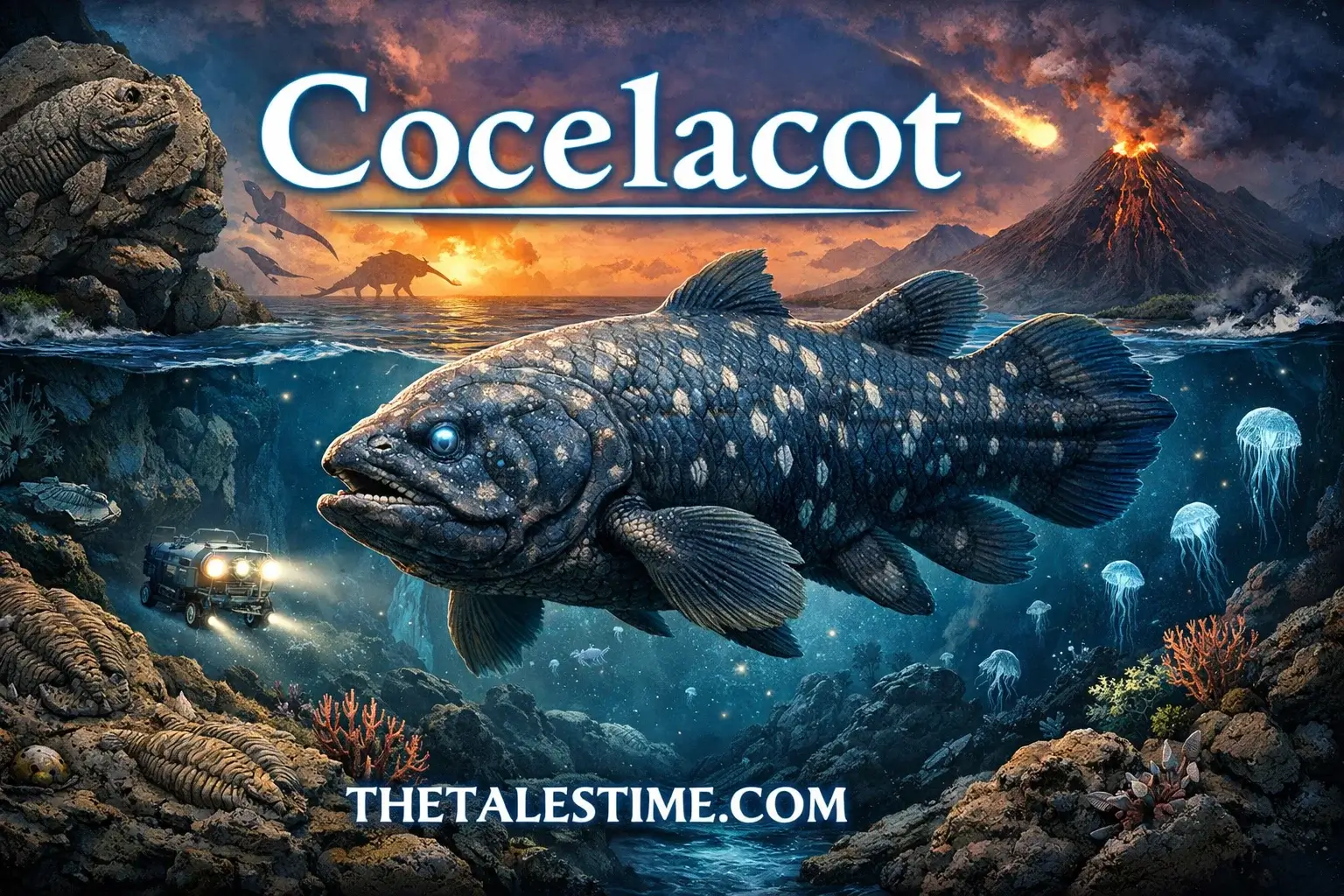
Cocelacot is one of the most fascinating biological mysteries known to science. It represents a lineage of life that has survived almost unchanged for hundreds of millions of years. While countless species vanished through mass extinction events, it endured in silence, hidden deep beneath ocean waters. Its existence reshaped how scientists understand evolution, extinction, and survival.
This article explores it in full depth. You will learn what it is, where it came from, how it lives, why it matters, and what threats it faces today. Each section is written to provide clarity, detail, and meaningful insight without exaggeration or speculation.
Understanding Cocelacot
Cocelacot refers to an ancient marine fish lineage characterized by primitive anatomical traits. It is often described as a living fossil because its modern form closely resembles fossilized ancestors. This continuity across geological time makes it extremely valuable to science.
Unlike most modern fish, it did not undergo rapid evolutionary change. Instead, it maintained a stable body structure that proved effective in deep sea environments. This stability allowed it to survive while other species disappeared.
The Discovery of The Term in Modern Times
For centuries, it was known only through fossils. Paleontologists believed it went extinct millions of years ago. Its sudden rediscovery in modern oceans shocked the scientific community.
The discovery forced researchers to reconsider assumptions about extinction. It showed that deep sea ecosystems can shelter ancient species beyond human observation. It became proof that the ocean still holds many secrets.
Evolutionary Origins of Cocelacot
It originated more than 400 million years ago during a time when marine life dominated Earth. Early oceans were warmer and oxygen levels varied greatly. These conditions shaped the development of many primitive vertebrates.
This fish lineage evolved before dinosaurs existed. It witnessed continental shifts, climate changes, and mass extinctions. Its survival reflects exceptional adaptability within a stable ecological niche.
Cocelacot and Mass Extinction Events
Earth experienced several mass extinction events that eliminated most life forms. It survived events that wiped out dominant species of their time. This includes periods when up to 90 percent of marine life vanished.
The survival of this term suggests deep sea refuges offered protection. Stable temperatures and isolation reduced exposure to catastrophic changes. These factors allowed it populations to persist.
Why Cocelacot Is Considered a Living Fossil?
A living fossil is a species that shows minimal evolutionary change over long periods. It fits this definition closely. Fossil records show striking similarity to living specimens. This does not mean it stopped evolving entirely. Instead, it reached an effective design early. Natural selection favored stability over modification.
External Anatomy
It has a thick, robust body covered in hard scales. These scales serve as armor against predators and environmental hazards. The body shape is heavy compared to most fish. Its head is large with powerful jaws. A unique skull joint allows wide mouth opening. This feature improves feeding efficiency in low light conditions.
Lobe Fins and Their Evolutionary Significance
One of the most distinctive features of it is its lobe fins. Unlike thin ray fins, these fins are muscular and jointed. Each fin connects to the body through a fleshy stalk. These fins resemble early limb structures. Scientists believe they represent an evolutionary step toward land animals. Studying them helps explain how movement evolved beyond water.
Internal Skeletal Structure
Cocelacot has a flexible internal support system rather than a fully ossified spine. This structure provides strength while allowing movement. It is considered a primitive trait.
The skeletal system shows a mix of ancient and functional features. This balance allows survival in deep ocean pressures. Few modern fish retain such characteristics.
Unique Respiratory Features
It retains a vestigial lung-like organ. While it does not function as a lung, it reflects early respiratory evolution. This organ suggests ancestral air-breathing capability. Modern term relies on gills. However, the presence of this structure offers insight into early vertebrate adaptation. It highlights evolutionary experimentation.
Sensory Adaptations in Cocelacot
Vision plays a limited role in deep sea life. It developed alternative sensory systems. One of these detects electrical signals produced by prey. This sensory adaptation allows precise hunting in darkness. It compensates for low visibility. Such systems demonstrate evolutionary specialization.
Habitat Preferences of Cocelacot
It lives in deep ocean environments far from sunlight. It prefers rocky slopes, underwater caves, and volcanic formations. These areas provide shelter and stable conditions. Depths typically range between 150 and 700 meters. At these levels, temperature changes slowly. This stability supports long-term survival.
Geographic Distribution
This terms populations exist in limited regions. They are not widespread across oceans. Instead, they inhabit specific zones where conditions remain favorable. This limited distribution increases vulnerability. Isolated populations face genetic challenges. Conservation becomes more complex.
Daily Activity Patterns
It follows a slow and deliberate lifestyle. It conserves energy by remaining inactive during daylight hours. Most movement occurs at night. During rest periods, it shelters in caves. This behavior reduces predator exposure. It also aligns with prey availability.
Feeding Behavior and Diet
Cocelacot feeds on smaller fish and marine invertebrates. It uses ambush tactics rather than pursuit. This method minimizes energy use. Its jaw structure supports sudden strikes. Prey rarely escapes once targeted. This feeding strategy suits deep sea conditions.
Metabolism and Energy Use
It has a slow metabolism. This allows it to survive with limited food. Energy conservation is critical in deep environments. Low metabolic rates contribute to long lifespan. They also support survival during food scarcity. This efficiency defines the term biology.
Reproductive Strategy of Cocelacot
This term reproduces through live birth. This method is rare among fish. It provides offspring with greater survival chances. Eggs develop inside the female. Young are born fully formed. This strategy reduces early life mortality.
Gestation Period and Development
The gestation period of the term is exceptionally long. It can last several years. This makes it one of the slowest reproducing fish. Offspring grow slowly after birth. Maturity takes many years. This slow pace increases population vulnerability.
Lifespan and Aging
It can live for decades. Some individuals may reach over sixty years. Longevity supports population stability over time. However, slow reproduction limits recovery from losses. Even small population declines are serious. Protection becomes essential.
Cocelacot and Scientific Research
This term provides a living window into early vertebrate evolution. Researchers study its anatomy, genetics, and behavior. Each study reveals new information. Its genetic material preserves ancient traits. Comparing it with modern species clarifies evolutionary pathways. Few organisms offer such insight.
Impact on Evolutionary Theory
The discovery of the termchallenged extinction models. It showed that some species persist unseen. This changed scientific assumptions. Evolution does not always favor change. Sometimes stability works best. It demonstrates this principle clearly.
Cultural and Historical Influence
It captured public imagination worldwide. It became a symbol of survival. Media coverage increased interest in marine science. Museums featured it prominently. Educational programs followed. It remains a powerful teaching tool.
Threats Facing Cocelacot
Modern threats place it at risk. Deep sea fishing damages habitats. Accidental capture reduces populations. Climate change alters ocean chemistry. Temperature shifts affect prey availability. Pollution reaches even deep waters.
Conservation Challenges
Protecting the term is difficult due to its habitat. Deep sea environments are hard to monitor. Limited data complicates planning. International cooperation is required. Local protections alone are not enough. Long-term strategies matter.
Importance of Marine Conservation
This protection supports broader ocean health. Deep sea ecosystems rely on balance. Disruption affects many species. Preserving ancient species preserves knowledge. Once lost, it cannot be recovered. Conservation protects history.
Differences Between Cocelacot and Modern Fish
Modern fish evolved faster and diversified widely. It remained stable. This contrast shows multiple survival strategies. Its anatomy appears primitive. Yet it functions effectively. Efficiency matters more than complexity.
Common Misconceptions About Cocelacot
Some believe it is aggressive. It is not. It avoids confrontation. Others think it is abundant. In reality, populations are small. Sightings remain rare.
Why It Matters Today?
It connects Earth’s past and present. It shows life’s resilience. It teaches patience and balance. Studying it improves science. Protecting it preserves heritage. Its value extends beyond biology.
Role of Technology in Research
Modern tools allow noninvasive study. Submersibles observe natural behavior. Data collection improves accuracy. Genetic research reveals lineage depth. Technology reduces harm. Ethical science guides progress.
Ethical Research Considerations
Researchers prioritize conservation. Invasive methods are avoided. Observation replaces collection. Education supports protection. Public awareness reduces exploitation. Ethics shape modern science.
Future Research Directions
Long-term monitoring is planned. Climate impact studies expand. Genetic mapping continues. Understanding it aids conservation. Knowledge informs policy. Research supports survival.
Comparison With Other Ancient Species
It shares traits with other ancient organisms. Survival through stability defines them. However, it shows unique complexity. Its anatomy bridges evolutionary stages. This sets it apart.
Lessons From Cocelacot Survival
The survival of the term offers one of the clearest lessons in evolutionary biology: change is not always necessary for success. While many species evolved rapidly to adapt to shifting environments, it followed a different path. Its body structure, metabolism, and behavior remained largely stable over hundreds of millions of years. This stability was not a weakness but a strength, allowing the species to thrive within a specific ecological niche where drastic change was unnecessary.
It demonstrates that evolution is not a constant race toward complexity. Instead, it responds to environmental pressures. In deep sea habitats where conditions remain relatively stable, radical physical changes offer little advantage. This term form proved efficient enough to meet survival needs, so natural selection favored consistency rather than transformation.
Efficiency is another critical lesson from its survival. The species uses minimal energy, moves slowly, and hunts strategically rather than aggressively. This approach reduces risk and conserves resources. In environments where food is scarce and recovery from injury is difficult, efficiency becomes more valuable than speed or strength.
Ultimately, it shows that nature rewards balance. Adaptation does not always mean becoming faster, larger, or more complex. Sometimes, survival depends on knowing when not to change. This lesson challenges modern assumptions about progress and highlights the importance of environmental fit over constant evolution.
Cocelacot in Education
It plays a powerful role in education because it provides a living example of concepts that are often abstract. Evolution, extinction, and adaptation can be difficult for students to visualize when taught only through theory. It bridges that gap by offering a real organism that connects ancient life to the present.
Educators use the term to explain long-term evolution and the idea that not all species follow the same evolutionary path. Its existence helps students understand that evolution does not move in a straight line toward improvement. Instead, it responds to environmental demands, sometimes favoring stability over innovation.
The story of term also inspires curiosity. Students are often fascinated by the idea that a creature once thought extinct is still alive. This sense of discovery encourages deeper engagement with biology, paleontology, and environmental science. Learning becomes more meaningful when students see how scientific knowledge can change with new evidence.
Beyond biology, it supports critical thinking skills. It teaches students to question assumptions, examine evidence, and accept uncertainty in science. By studying cocelacot, learners gain a broader understanding of how knowledge evolves, making education more engaging and impactful.
Media Representation
Media representation plays a crucial role in shaping public understanding of this term. Accurate portrayal helps build trust in science and encourages respect for marine life. When facts are presented clearly and responsibly, the public gains a realistic appreciation of why It matters.
However, sensationalism can be harmful. Exaggerated claims, dramatic language, or misleading visuals often distort the true nature of the term. Portraying it as a monster or miracle distracts from its real scientific value. Such misrepresentation can lead to misunderstanding and reduce support for serious conservation efforts.
Scientists increasingly work with media professionals to improve accuracy. By collaborating on documentaries, educational content, and public outreach, researchers ensure that information remains factual while still engaging. Clear communication helps audiences understand complex ideas without oversimplification.
Responsible media coverage also promotes conservation awareness. When it is presented as a fragile and valuable species rather than a curiosity, it encourages respect rather than exploitation. Accuracy in media is not just about information; it directly influences public attitudes and behavior.
Economic and Social Impact
The rediscovery and study of the term had significant economic and social effects. Scientific interest led to increased funding for marine research, particularly in deep sea exploration. Universities, research institutions, and conservation programs benefited from renewed attention to ocean science.
Public awareness of marine ecosystems also improved. It became a symbol of how little humans still know about the oceans. This awareness encouraged broader conversations about ocean protection, biodiversity, and sustainable resource use. Communities near it habitats gained greater visibility in conservation discussions.
However, increased attention also carries risks. Rare species often attract exploitation, whether through illegal capture, unregulated tourism, or commercial interest. Without proper regulation, economic opportunities can quickly turn into threats.
Balanced regulation is essential to protect the term while allowing responsible research and education. Policies that limit harmful activities and promote sustainability ensure that economic benefits do not come at the cost of extinction. Long-term protection depends on maintaining this balance.
Global Cooperation in Protection
In this term, conservation cannot succeed through isolated efforts. The oceans connect nations, and marine species do not follow political boundaries. Protecting it requires cooperation between countries, research institutions, and environmental organizations.
Global data sharing allows scientists to track populations, monitor threats, and understand migration patterns. When countries collaborate, research becomes more accurate and effective. Shared strategies reduce duplication and strengthen conservation outcomes.
International agreements also play a key role. Regulations on deep sea fishing, habitat destruction, and marine pollution require collective enforcement. No single nation can protect it alone, especially when its habitat spans multiple regions.
It benefits from unity because cooperation amplifies impact. Collective action ensures stronger protection, better science, and shared responsibility. Global collaboration reflects the reality that preserving life in the oceans is a shared human obligation.
Final Thoughts
Cocelacot stands as a survivor of deep time, a living reminder of Earth’s distant past. While countless species vanished through environmental upheaval, it endured by remaining perfectly suited to its environment. Its survival challenges assumptions about progress, evolution, and extinction.
The existence of the term enriches science by offering direct insight into ancient life forms. It allows researchers to study evolutionary pathways that would otherwise be known only through fossils. Each discovery connected to it deepens understanding of how life adapts and persists.
Protecting the term means protecting knowledge. Once such a species is lost, the information it carries disappears forever. Conservation is not only about preserving animals but also about safeguarding history and scientific opportunity.
Ultimately, it reminds us of nature’s depth and resilience. It teaches humility, patience, and respect for ecosystems that operate beyond human timelines. Understanding it helps shape a future where knowledge, conservation, and responsibility move forward together. Dive into reliable, engaging, and well-crafted articles only on THETALESTIME.
Frequently Asked Questions – FAQs
What exactly is cocelacot?
Cocelacot is an ancient deep sea fish lineage known for surviving millions of years with minimal evolutionary change.
Why is it called a living fossil?
It closely resembles fossil ancestors and shows little anatomical change over hundreds of millions of years.
Where does cocelacot live?
It inhabits deep ocean environments, usually in rocky areas and underwater caves far below sunlight.
Is it dangerous to humans?
No, it is slow, passive, and avoids contact with humans.
Why is it important to science?
It helps scientists understand vertebrate evolution, limb development, and long-term survival strategies.
